
Articles tagged with: stamp act repeal
Declaratory Act, Timeline of British Acts on America »

What was the Declaratory Act?
The Declaratory Act was a measure issued by British Parliament asserting its authority to make laws binding the colonists “in all cases whatsoever” including the right to tax. The Declaratory Act was a reaction of British Parliament to the failure of the as they did not want to give up on the principle of imperial taxation asserting its legal right to tax colonies.
When Parliament it concurrently approved the Declaratory Act to justify its repeal. It also declared all resolution issued by the null and void. This …
Stamp Act »

The Stamp Act Crisis and its significance
The act was widely opposed by the colonial population resulting in organized protests that allowed the revolution movement to gain tactical experience and set a pattern of resistance that led to the American independence. During the Stamp Act crisis Americans argued that there was a difference between taxing them for revenue and taxing them for the regulation of trade. They sustained that Britain did not have the authority to tax them for revenue. The resistance of the colonies against being taxed has its roots in …
Stamp Act »

The was nullified before it went into effect and was repealed by parliament on March 18, 1766 under the Marquis of Rockingham.
In the summer of 1765 King George III fired George Grenville and replaced him with Charles Watson-Wentworth, Marquis of Rockingham. For the new Prime Minister the only alternative to repealing the tax was a long and costly civil war with the American colonies. Britain, as the world greatest power, could not give up on the decision to uphold the tax and give in to mobs and activist in its …
Stamp Act »

The British Parliament made a decision to install the Stamp Act on March 22, 1765. As a result of this law American colonies were obliged to pay a fee on almost every piece of paper used for legal documents, licenses, etc.
Stamp Act, Timeline of British Acts on America »
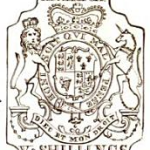
What was the Stamp Act?
The Stamp Act was a tax imposed by the British government on the American colonies. British taxpayers already paid a stamp tax and Massachusetts briefly experimented with a similar law, but the Stamp Act imposed on colonial residents went further than the existing ones. The primary goal was to raise money needed for military defenses of the colonies.
This legislative act was initiated by the British prime minister and adopted by the British Parliament. The decision was taken on March 1765 but did not take effect until …

