
Articles tagged with: stamp act
Stamp Act »

The Stamp Act Congress met in the Federal Hall building in New York City between October 7 and 25, 1765. It was the first colonial action against a British measure and was formed to protest the issued by British Parliament on March 1765. The Stamp Act Congress was attended by of nine of the thirteen colonies. Virginia, North Carolina and Georgia were prevented from attending because their loyal governors refused to convene the assemblies to elect delegates. New Hampshire did not attend but approved the resolutions once Congress was over.
Federal …
Declaratory Act, Timeline of British Acts on America »
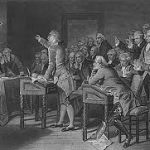
What was the Declaratory Act?
The Declaratory Act was a measure issued by British Parliament asserting its authority to make laws binding the colonists “in all cases whatsoever” including the right to tax. The Declaratory Act was a reaction of British Parliament to the failure of the as they did not want to give up on the principle of imperial taxation asserting its legal right to tax colonies.
When Parliament it concurrently approved the Declaratory Act to justify its repeal. It also declared all resolution issued by the null and void. This …
Headline »
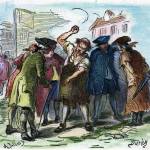
There were twelve years between the signing of the Treaty of Paris on February 1763 and the ride of Paul Revere on April 1775. Tension and anger between colonists and the empire increasingly rose to the point of no return. During the short period of 1762-1770 the causing disruption in its colonial policy. Furthermore, it found itself fighting wars in Europe, West Indies and Asia which drastically increased the cost of servicing its national debt. At the top of its agenda was the lightening of the burden on British …
British Taxation in Colonial America, Stamp Act »
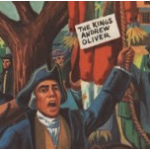
Up until the attempt to collect the Stamp duty colonists had accepted minor duties on trade such as the , and even the . cost more to administer than it collected in revenue. Those measures were not considered as “tax” by the colonial assemblies but as trade regulations that compensated for protection, access to foreign products and a foreign market for American goods.
Colonists were careful to draw distinction between internal and external taxes. Internal taxes were those imposed by the provincial government, members of which were elected by residents, …
British Taxation in Colonial America, Stamp Act »
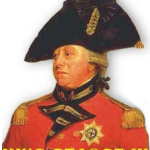
Proponents of an American Stamp Duty were found on both sides of the Atlantic but most supporters were in Britain. One of the most vocal British opponents on the American tax was William Pitt, the Earl of Chatham, who led Britain to victory during the French Indian War. Edmund Burke, a statesman and philosopher, strongly opposed the tax and supported American independence. Most merchants also opposed taxation.
British expenditure during the French Indian War almost doubled Britain’s debt. During that period the government borrowed heavily, about four-fifth of the total amount …
Stamp Act »
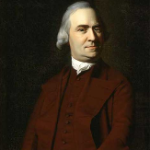
Representatives from nine colonies attended the Stamp Act Congress.
From Massachusetts: James Otis, Samuel Adams, Oliver Partridge and Timothy Ruggles.
From Rhode Island: Henry Ward and Metcalf Bowler
From Connecticut: William Johnson, Eliphalet Dyer and David Rowland.
From New York: Phillip Livingston, William Bayard, John Cruger, Robert Livingston and Leonard Lispinard.
From Pennsylvania: John Morton, George Bryan and John Dickinson.
From New Jersey: Hendrick Fisher, Robert Ogden and Joseph Gordon.
From Delaware: Caesar Rodney and Thomas McKean.
From Maryland: Edward Tilghman, Thomas Ringgold and William Murdock.
From South Carolina: John Rutledge, Thomas Lynch and Christopher Gadsden.
Secretary: John Cotton
President: Timothy …
Stamp Act »
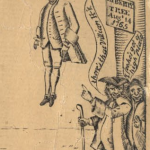
Chronological events that led to the Stamp Act crisis and its repeal.
1694 – The English started paying a Stamp Act tax.
1754 – 1763 – French Indian War affects England financially.
1755 – Massachusetts experimented with Stamp Act.
1760 – King George III became King of England. He though Parliament had unfairly limited powers of the king. He and his advisers took more control over governing the country and its colonies.
1763 – The British defeated the French and took control of territory in Eastern Canada and west of the 13 colonies.
1763 – The …
Stamp Act »
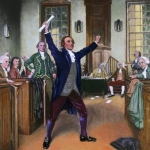
The Stamp Act Crisis and its significance
The act was widely opposed by the colonial population resulting in organized protests that allowed the revolution movement to gain tactical experience and set a pattern of resistance that led to the American independence. During the Stamp Act crisis Americans argued that there was a difference between taxing them for revenue and taxing them for the regulation of trade. They sustained that Britain did not have the authority to tax them for revenue. The resistance of the colonies against being taxed has its roots in …
Documents, Stamp Act »
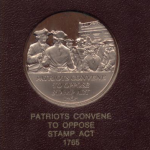
The members of this Congress, sincerely devoted, with the warmest sentiments of affection and duty to His Majesty’s Person and Government, inviolably attached to the present happy establishment of the Protestant succession, and with minds deeply impressed by a sense of the present and impending misfortunes of the British colonies on this continent; having considered as maturely as time will permit the circumstances of the said colonies, esteem it our indispensable duty to make the following declarations of our humble opinion, respecting the most essential rights and liberties of the …
Stamp Act »
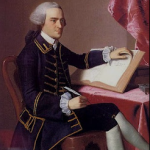
Samuel Adams (1722-1803)
A graduate from Harvard College, unsuccessful businessman and tax collector, entered politics to coordinate efforts against as a leader of . The Sons of Liberty were responsible for the , he was portrayed as a master of propaganda. He was an official of the Massachusetts House of Representatives and one of the founding fathers of the United States. He was a cousin of President John Adams.
Samuel Adams
James Otis (1725-1783)
James Otis graduated from Harvard College. He was a top lawyer in Boston and became known as an opponent …

