
Articles in the Timeline of British Acts on America Category
Declaratory Act, Timeline of British Acts on America »
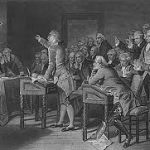
What was the Declaratory Act?
The Declaratory Act was a measure issued by British Parliament asserting its authority to make laws binding the colonists “in all cases whatsoever” including the right to tax. The Declaratory Act was a reaction of British Parliament to the failure of the as they did not want to give up on the principle of imperial taxation asserting its legal right to tax colonies.
When Parliament it concurrently approved the Declaratory Act to justify its repeal. It also declared all resolution issued by the null and void. This …
Currency Act, Timeline of British Acts on America »
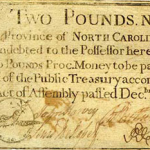
Definition of the 1764 Currency Act
The 1764 Currency Act was a law passed by British Parliament to regulate the issue and legal tender status of paper money in the colonial economy. This act was an extension of the that applied to New England colonies, the 1764 Currency Act applied the same principles to all British colonies in America.
Why was the 1764 Currency Act passed?
British law banned the minting of coins and the issue of official government money in America. To avoid this restriction colonial governments issued “bills of public credit”, …
Currency Act, Timeline of British Acts on America »
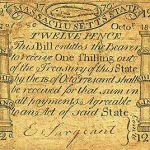
What was the Currency Act of 1751?
The Currency Act of 1751 prohibited the issue of new bills of credit by New England colonies: Rhode Island, Massachusetts Bay, New Hampshire and Connecticut. Parliament decided to enact the Currency Act of 1751 to control currency depreciation against silver and sterling and to ensure its value for payments of debt to British merchants. extended the policy to all British colonies in the Americas increasing more tension between Britain and America.
Why was the 1751 Currency Act passed?
Most of the hard currency and revenues in …
Featured, Intorelable Acts or Coercive Acts, Timeline of British Acts on America »

The Intolerable Acts also known as Coercive Acts were a package of five laws implemented by the British government with the purpose of restoring authority in its colonies. The first four Acts were passed as reprisal for the rebellion against the that led to the Boston Tea Party Protest.
The Intolerable Acts were a reprisal to the Boston Tea party rebellion.
The first act was The Boston Port Act which came into effect on March 31, 1774; it closed the port of Boston until the East India Tea company was repaid …
Timeline of British Acts on America, Townshend Acts »
In 1766 Charles Townshend assumed the position of Chancellor of the Exchequer; he was an ally of Grenville and a strong supporter of colonial taxation, and decided to reattempt the collection of funds from British colonies.
In 1767 Townshend proposed a new set of measures known as the Townshend Acts. The Acts were passed in early June with an overwhelming support of parliament, and were to be effective on November 20th. After the the British had to show the colonies that Britain had the right to tax the colonies, raise …
Tea Act, Timeline of British Acts on America »

The Tea Act was intended to benefit the East India Company by giving them the monopoly of the American tea market. Colonist perceived it as another means of “taxation without representation”.
British Taxation in Colonial America, Timeline of British Acts on America »
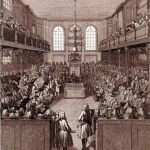
During the early seventeenth century Britain created a mercantile system to maintain close control and regulate trade of its colonies, they tried to make sure all revenues generated from the trade with its American colonies went back to the crown. This system did not allow its colonies to freely trade with other countries other than Britain. The first of its protective measures was the The law was designed to protect British economic interests in colonial trade and to protect its industry against the rapidly growing Dutch navigation trade, it …
Molasses Act, Timeline of British Acts on America »
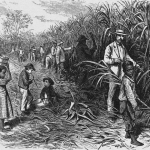
This was one of the first decisions of British Parliament that gave a real boost to organizers smuggling in New England colonies. Simultaneously it promoted corruption among customs officials. To crack down colonial trade with countries other than Britain, especially France, the government created a new on foreign molasses.
The Molasses Act of 1733 was enacted by the British Parliament on the 13 colonies of America with the purpose of protecting its sugar plantations in the West Indies. This act was not designed to raise revenue but it was part of …
Featured, Quartering Act, Timeline of British Acts on America »

The first in the series of Quartering acts passed by the British parliament. Also known as the American Mutiny Act, The Quartering Act of 1765 was passed on May 3rd, 1765 and required colonial assemblies to provide housing, food and drink to British troops stationed in their towns with the purpose of improving living conditions and decreasing the cost to the crown. This act was implemented by General Tomas Gage, the commander in chief of North America. Soldiers were to be housed in barracks or empty public buildings and not …
Stamp Act, Timeline of British Acts on America »
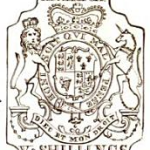
What was the Stamp Act?
The Stamp Act was a tax imposed by the British government on the American colonies. British taxpayers already paid a stamp tax and Massachusetts briefly experimented with a similar law, but the Stamp Act imposed on colonial residents went further than the existing ones. The primary goal was to raise money needed for military defenses of the colonies.
This legislative act was initiated by the British prime minister and adopted by the British Parliament. The decision was taken on March 1765 but did not take effect until …

